

Buy Montessori Educational Toy Sets: Best Picks for 2026
Table of Contents
- Quick Comparison: Montessori Educational Toys by Age and Price
- How to Spot Authentic Montessori Toys (Not Just Marketing)
- Montessori Learning Kits: What Comes in a Complete Set
- Choosing Montessori Educational Toys by Age: 1 to 5 Years
- Best Montessori Toys for Gifts: What Grandparents Should Know
- Safety, Materials, and Durability: What to Check Before You Buy
- Conclusion: Matching the Right Set to Your Child
- Frequently Asked Questions
Last Updated: October 12, 2026
Quick Comparison: Montessori Educational Toys by Age and Price
To buy Montessori educational toy sets that match your child's stage, start with age. A one-year-old and a four-year-old need completely different materials, and the wrong set ends up untouched.
Here is the short version:
| Set | Age Range | Price | Best For |
|---|---|---|---|
| Montessori 1-2 Years Busy Bundle | 1-2 years | $99.95 | New walkers and explorers |
| Montessori 2-3 Years Essentials Bundle | 2-3 years | $99.95 | Toddlers building independence |
| Montessori 3-5 Years Pre-School Bundle | 3-5 years | $99.95 | Preschoolers and early learners |
| 6-in-1 Activity Cube | 1-4 years | $54.45 | One toy, many skills |
| Montessori Busy Board | 1-4 years | $34.45 | Travel and quiet time |
| Montessori Catch & Count Fishing Set | 1+ years | $39.95 | First counting and color sorting |
| Montessori Shape Sorting Cube | 3+ years | $34.45 | Shape and color recognition |
| Alphabets & Numbers Wooden Flash Cards | 3+ years | $44.45 | Early letters and numbers |
| Montessori Sensory Book | 2-5 years | $29.95 | Fine motor practice on the go |
| Montessori Building Blocks Set | 18 months+ | $39.95 | Open-ended building play |
The three bundles cost the same, so the decision comes down to age, not budget. For a first purchase, match the bundle to your child's current stage, then add single pieces as they grow.

How to Spot Authentic Montessori Toys (Not Just Marketing)
Authentic Montessori toys share three traits: natural materials, one skill at a time, and self-correction without an adult. If a toy needs batteries, flashes lights, or does the playing for the child, it is not Montessori, no matter what the box says.
The word "Montessori" is not regulated in the United States, so any brand can print it on a package. A few checks separate the real thing from a marketing label:
- Material: Solid wood, non-toxic paint, and natural finishes are the standard. Our Shape Sorting Cube is made from natural wood with non-toxic paint and smooth edges.
- Self-correction: A child should be able to see their own mistake. A shape that does not fit the hole shows the error without a parent saying a word.
- One skill per toy: A good Montessori material teaches one thing well rather than five things poorly.
American Montessori Society guidance on Montessori materials explains that the materials themselves are central to the method, not an add-on. When a toy follows those principles, it earns the name.
Montessori Learning Kits: What Comes in a Complete Set
A complete Montessori learning kit groups materials by stage so a child gets everything at once.
That structure matters because Montessori learning happens in sequence: grasping and stacking come before sorting, and sorting before counting. A kit that skips ahead leaves gaps.
Here is what the three bundles are designed to cover:
- Montessori 1-2 Years Busy Bundle: the earliest stage, focused on grasping, reaching, and simple cause-and-effect play.
- Montessori 2-3 Years Essentials Bundle: the independence stage, where toddlers practice real-life skills and longer focus.
- Montessori 3-5 Years Pre-School Bundle: the preschool stage, where sorting, counting, and early language take center stage.
If you are not ready for a full collection, start with a single piece like the Montessori Busy Board and add more later.

Choosing Montessori Educational Toys by Age: 1 to 5 Years
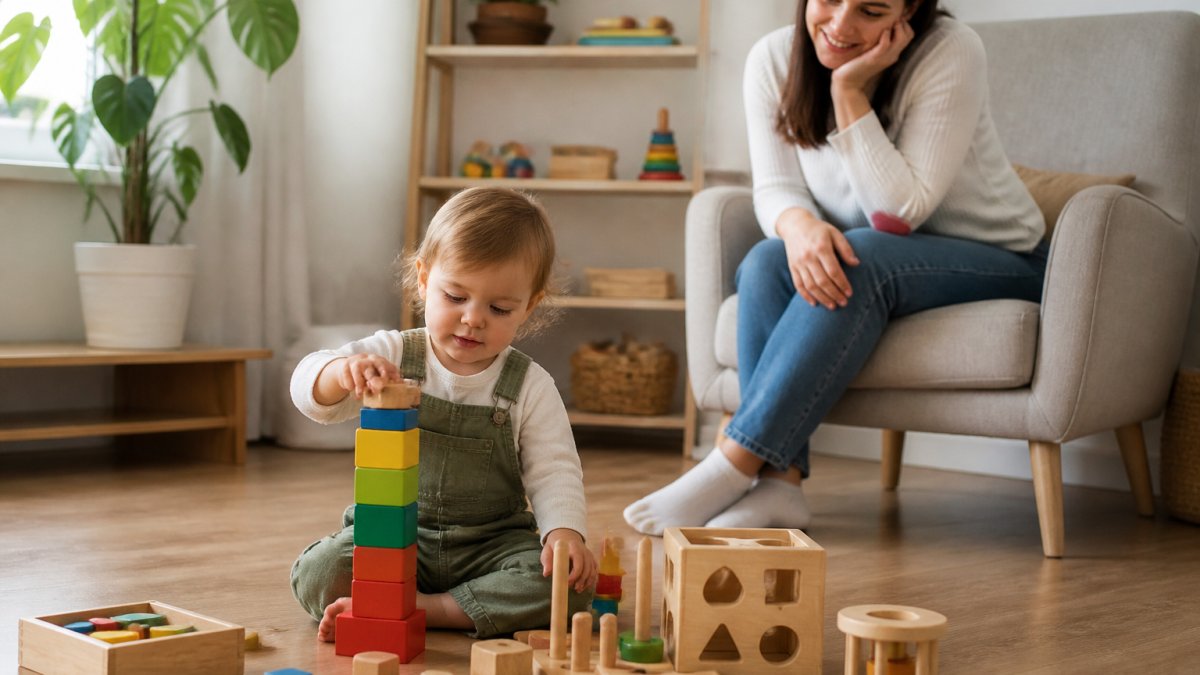
The right toy at the right age keeps a child engaged; the wrong one gets ignored. Age is the most useful filter when you buy Montessori educational toy sets, because each stage has a different job.
Ages 1 to 2: Grasping and Exploring
At this stage, children learn through their hands and mouths. Choose large, sturdy pieces with no small parts. The 6-in-1 Activity Cube fits here, with a bead maze, shape sorter, sliding number blocks, and a sensory clock built into one solid wood frame.
Ages 2 to 3: Independence and Focus
Toddlers this age want to do things themselves. Practical-life materials shine here. The Montessori Busy Board lets a child practice shoelaces, zippers, snaps, and eight types of buckles, all tasks that build hand coordination and patience.
Ages 3 to 5: Sorting, Counting, and Language
Preschoolers are ready for categories and early academics. The Alphabets & Numbers Wooden Flash Cards support letter and number recognition, while the Montessori Catch & Count Fishing Set turns counting from 1 to 5 and color sorting into a game.
Best Montessori Toys for Gifts: What Grandparents Should Know
Shopping for a grandchild gives you an advantage most parents do not have: you can buy one really good thing instead of a pile of small things. A thoughtful, high-quality gift beats a big box of plastic, and it gets remembered because it is still in use a year later.
You do not need to study the Montessori method to pick well, just know the child's age, what they like to do with their hands, and a few signs of quality.
Match the gift to the age, not the birthday
A toy that fits the child's current stage gets played with daily. One that is a year ahead sits on a shelf. Use this quick map:
- Around age 1: large, sturdy pieces with no small parts. Look for grasping, reaching, and cause-and-effect play. The Montessori Catch & Count Fishing Set works here as a simple catching game, and the 6-in-1 Activity Cube gives a child a bead maze, shape sorter, sliding number blocks, and a sensory clock in one solid wood frame.
- Ages 2 to 3: the independence stage. Toddlers want to do things themselves, so practical-life materials shine. The Montessori Busy Board lets a child practice shoelaces, zippers, snaps, and eight types of buckles, all of which build hand coordination and patience.
- Ages 3 to 5: sorting, counting, and early language. The Alphabets & Numbers Wooden Flash Cards support letter and number recognition, and the Montessori Catch & Count Fishing Set turns counting from 1 to 5 and color sorting into a game.
If you are unsure, the 6-in-1 Activity Cube is the safest single gift: it suits a wide age range and packs several activities into one piece, so it stays interesting long after the wrapping paper is gone.
What makes a wooden toy a good gift
A few things separate a gift that lasts from one that gets donated by spring:
Montessori 3-5 Years Pre-School Bundle →
- Real wood and non-toxic finishes: These hold up to drops and daily use, and they feel substantial in the hand.
- Room to grow: A toy that works across two or three years gives more value than one that is outgrown in months.
- Quiet play: Fabric and wood toys are gentle on floors and ears, which parents appreciate more than you might expect.
A note on the philosophy (the short version)
You do not need the full history. The practical idea is simple: give a child real materials, sized for small hands, that let them practice one skill at a time and see their own mistakes.
If you want a starting point, the Montessori 2-3 Years Essentials Bundle and the Montessori 3-5 Years Pre-School Bundle are both built around a single stage, so you can give a complete set without guessing which individual pieces go together.

Safety, Materials, and Durability: What to Check Before You Buy
Safety comes down to three things: what the toy is made of, how it is finished, and whether it holds up. Solid wood with non-toxic paint and smooth edges is the baseline. Anything with loose small parts, sharp corners, or a strong chemical smell should go back on the shelf.
Age-specific choking and small-part checks
The biggest risk with any toy set is a piece small enough to fit through a child's throat. A common rule of thumb: anything that fits inside a toilet-paper tube is a choking risk for a child under three. That means:
- Under 3: avoid sets with loose beads, small magnets, marbles, or tiny pegs. Check that every attached piece cannot be pulled off by hand. Tug on knobs, beads, and wheels before you buy.
- Ages 3 to 5: small parts become less of a hazard, but still check for pieces that can splinter or break into sharp edges. Wooden toys that have been dropped repeatedly are the ones to inspect.
- Any age: skip anything with peeling paint, splintering wood, or loose hardware. A chipped finish on a wooden toy can mean a choking hazard for a child who still mouths objects, and it is not worth the risk at any price.
U.S. Consumer Product Safety Commission toy safety guidance sets the federal standards toys must meet, and checking for that compliance is a reasonable first step for any purchase.
Materials and finishes
Look for solid wood rather than particleboard or MDF, which can chip and swell when chewed or washed. Non-toxic paint and natural finishes are the standard for toys that end up in mouths.
Our Building Blocks Set is certified by ASTM, CPSIA, and CPC, made from food-grade materials, and washable, which matters for toys that end up in mouths. Those certifications come from independent testing, not self-declaration.
Cleaning and care
Wooden toys are not dishwasher-safe: wipe with a damp cloth and mild soap, then dry immediately so the wood does not swell or crack. Fabric pieces like the Montessori Sensory Book can usually be spot-cleaned. Avoid harsh disinfectants, which strip finishes and leave residue a child may mouth.
Durability: what to expect
Durability follows material: solid wood toys can be handed down, while thin plastic ones often crack within a season. When you buy Montessori educational toy sets built from real wood, you are buying something that can survive a second child. The moving parts, hinges, knobs, and sliding pieces, fail first, so check those on a hand-me-down set before passing it along.
Conclusion: Matching the Right Set to Your Child
The hardest part of buying Montessori toys is not the price, it is the match. A set that fits your child's stage gets used every day; one that does not gets ignored.
At Project Montessori, every set is educator-approved and rooted in the Montessori philosophy, from our age-based bundles to single pieces like the Busy Board and Shape Sorting Cube, each designed to build independence, creativity, and real skill through hands-on play.
Ready to find the right fit? Shop now and give your child a set built for their stage.
Frequently Asked Questions
What should I look for in a Montessori toy set?
Look for toys made from natural materials like wood, with simple designs that let children explore without batteries or flashing lights. Check that the toy has a clear purpose, such as sorting, stacking, or lacing, and that it matches your child's current developmental stage. Project Montessori sets range from $29.95 to $99.95 and include items like shape sorting cubes, busy boards, and building blocks, all designed for hands-on learning through play.
How do I know if a toy is truly Montessori-inspired?
Authentic Montessori toys share a few traits: they use natural materials, have a single clear purpose, encourage independent play, and avoid overstimulation. Look for wooden construction, non-toxic finishes, and age-appropriate challenges. A busy board with real buckles and laces teaches practical life skills, while a shape sorting cube builds fine motor skills and concentration. If a toy lights up, plays music, or does the work for the child, it is not Montessori-aligned.
Which Montessori toy sets are best for toddlers?
For toddlers aged 1 to 3, start with the Montessori 1-2 Years Busy Bundle or the Montessori 2-3 Years Essentials Bundle, both priced at $99.95. These sets include age-appropriate materials for sensory exploration, fine motor skills, and early counting. The 6-in-1 Activity Cube at $54.45 and the Montessori Busy Board at $34.45 also work well as standalone pieces for this age group, offering hands-on activities that keep little hands engaged.
Are Montessori toy sets good gifts for children?
Yes. Montessori sets make thoughtful gifts because they are durable, educational, and designed to grow with the child. The Montessori Catch & Count Fishing Set at $39.95 suits a first birthday, while the Montessori 3-5 Years Pre-School Bundle at $99.95 works for older preschoolers. Grandparents often choose these sets because they support learning through play and hold up to rough use, unlike plastic toys that break or lose appeal quickly.
How many toys should a child have available at once?
Montessori practice suggests keeping only a few toys accessible at a time, usually 6 to 8 items on a low shelf. Rotate them every week or two to keep interest high and reduce clutter. This approach helps children focus on one activity, build concentration, and develop independent play habits. Storing the rest out of sight makes rotation easy and keeps the play area calm and organized.
Finding the right Montessori set comes down to matching the materials to your child's stage, not chasing the biggest collection. Project Montessori offers educator-approved bundles and single pieces designed to support independence and hands-on learning at every age. Browse our age-based sets and pick the one that fits your child today.