

Safe Materials for Baby Toys: A 2026 Parent's Guide
Table of Contents
- What Counts as Safe Materials for Baby Toys?
- Materials to Avoid in Baby Toys
- How to Read a Toy Label and Verify Safety Standards
- Safe Finishes for Wooden Toys: What to Look For
- Best Non Toxic Wooden Baby Toys for Different Ages
- How to Clean Wooden Baby Toys Without Damaging the Finish
- Budget-Friendly Non-Toxic Sourcing and End-of-Life Disposal
- Frequently Asked Questions
Last Updated: October 2, 2026
What Counts as Safe Materials for Baby Toys?
Safe materials for baby toys are those verified free of harmful chemicals like lead, phthalates, and BPA, and durable enough to survive mouthing without breaking down. The global baby and toddler toys market hit USD 28.74 billion in 2026, per Fortune Business Insights market analysis, and a growing share of that spending now goes toward natural options.
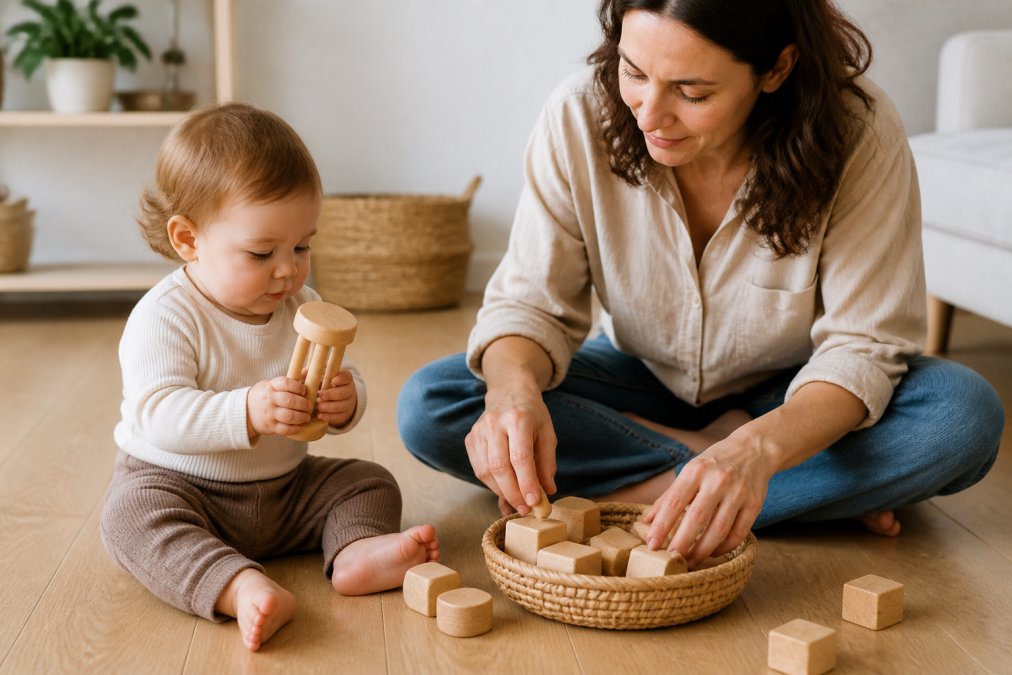
The Four Materials Pediatricians Keep Recommending
Solid hardwood (maple, beech, walnut) tops the list because it resists splintering and rarely contains synthetic additives. Food-grade silicone is inherently free of BPA and phthalates, and it sanitizes easily. Organic cotton and natural rubber round out the group for soft toys and teethers. Each has trade-offs:
| Material | Best For | Watch Out For |
|---|---|---|
| Solid hardwood | Teethers, blocks, stacking toys | Heavier; check for splinters |
| Food-grade silicone | Teethers, bath toys | Can retain odors over time |
| Organic cotton | Stuffed animals, soft books | Harder to deep-clean |
| Natural rubber | Teethers, squeeze toys | Degrades faster than wood |
Materials to Avoid in Baby Toys
PVC, polyurethane foam, and soft plastics containing heavy metals are the biggest offenders, according to Toxic-Free Future's guide to safer toys. Vinyl softeners and flame retardants off-gas over time, and mouthing accelerates that exposure. Skip anything labeled simply "plastic" without a resin code, and avoid painted surfaces on older or secondhand toys unless you can confirm lead-free status.
How to Read a Toy Label and Verify Safety Standards
All children's toys manufactured or imported on or after February 28, 2018, must be tested and certified to ASTM F963-17, per ASTM International and CPSC certification requirements. That's your baseline. Look for a CPSIA compliance statement, an age-grading mark, and a manufacturer name you can trace. If a label names no testing standard at all, treat it as unverified.
DIY Checks You Can Do in the Store
You don't need a lab to screen a toy before purchase. A few hands-on checks catch most problems:
- Smell the toy. A strong chemical or plastic odor signals off-gassing.
- Press a fingernail into painted surfaces. Flaking paint fails the mouthing test.
- Check for small parts that fit inside a toilet paper tube (choking risk under age 3).
- Feel for rough edges, loose joints, or exposed screws.
- Confirm the wood is sealed with a food-safe finish, not left raw and splinter-prone.
Safe Finishes for Wooden Toys: What to Look For
Beeswax finishes, linseed oil, and water-based dyes are the safe finishes for wooden toys, because they cure without releasing formaldehyde or heavy metals. Unfinished wood is fine too, provided it's sanded smooth and free of splinters. Avoid toys with glossy lacquered coatings unless the manufacturer states the coating is water-based and lead-free.
Best Non Toxic Wooden Baby Toys for Different Ages
The best non toxic wooden baby toys match the child's developmental stage, not just their birth date. Research from the National Institutes of Health on age-appropriate toy selection confirms that moderating toy choice by age is essential for safety across developmental stages. But age is only half the equation. The material has to match what the child will actually do with the toy, and babies do very different things at 4 months than they do at 18 months.
Match the Material to the Mouthing Stage
A common pattern pediatric dentists and early-childhood educators point to: mouthing peaks between 4 and 18 months, then tapers as toddlers shift to throwing, stacking, and pretend play. That timeline should drive your material choice more than the age printed on the box.
| Stage | What Baby Does | Safest Materials | Why |
|---|---|---|---|
| 0-6 months | Gnaws, grasps, tracks with eyes | Unpainted solid maple or beech; food-grade silicone | No finish to chip; silicone is inert and won't harbor bacteria if cleaned |
| 6-12 months | Bites hard, bangs, drops | Hardwood with beeswax or food-safe oil finish; natural rubber | Rubber flexes under new teeth; sealed wood resists saliva breakdown |
| 12-24 months | Stacks, sorts, carries | Solid hardwood blocks and puzzles; organic cotton soft toys | Wood holds up to repeated drops; cotton is safe if mouthing continues |
| 24-36 months | Pretend play, rough-and-tumble | Hardwood sets, water-based-dyed pieces | Dyes must be water-based to stay safe if a piece still goes in the mouth |
Sensory-Specific Picks
Most guides lump all toys together. A more useful breakdown separates them by the sense the toy is built to engage:
Montessori Family Keepsake Frame →
- Teething: Natural rubber (like the classic one-piece teether shape) and food-grade silicone. Both flex instead of cracking. Avoid frozen gel teethers, if the seam fails, the contents are not meant to be swallowed.
- Tactile exploration: Unfinished or beeswax-finished hardwood with rounded edges. The grain gives texture without paint that can flake. Skip anything with raised painted details a fingernail can lift.
- Bath time: Food-grade silicone only. Wood swells and cracks with repeated soaking, and fabric grows mildew. Mold-resistant silicone is the one material that survives daily water exposure.
- Auditory play: Solid-wood rattles and sound puzzles. Wood produces a warm, non-shrill tone, and there are no batteries or sealed electronic components to leak.
How to Clean Wooden Baby Toys Without Damaging the Finish
Wipe wooden baby toys with a damp cloth and mild soap, then dry immediately. Never soak them, and never put them in the dishwasher. A monthly rub with food-grade mineral oil or beeswax keeps the grain sealed. Silicone parts can go in warm soapy water; organic cotton should be hand-washed and air-dried to prevent shrinkage.

Budget-Friendly Non-Toxic Sourcing and End-of-Life Disposal
Most non-toxic toy guides lean toward boutique brands and premium price points. That leaves out the majority of families. The good news: safe materials are not inherently expensive, and the secondhand market is full of solid wood that outlasts anything made of plastic. Extending this focus on durability and chemical safety to your nursery staples ensures that safe infant clothing materials remain accessible regardless of your budget.
Where to Find Safe Toys Without Paying Boutique Prices
- Buy fewer, better pieces. Two or three solid-wood toys per stage cost less over three years than a rotating pile of plastic. Wood holds resale value; plastic usually does not.
- Shop secondhand, with a filter. Thrift stores, consignment sales, and online marketplaces carry plenty of hardwood blocks and puzzles. The catch is finish and age. Anything made before 2009 may have lead-based paint, and you cannot verify it without a CPSIA label. Skip painted pieces from that era; bare or beeswax-finished wood is usually fine.
- Check the finish, not the brand. A no-name wooden block sealed with food-safe oil is safer than a branded toy with a glossy lacquered coat. Turn the piece over and look for a matte, slightly waxy surface.
- Skip the toy aisle, check the kitchen aisle. Food-grade silicone utensils and teethers share the same material standards. A silicone spatula and a silicone teether are often the same base polymer.
- Watch for sales on open-box returns. Retailers discount returned wooden toys heavily because they cannot resell them as new. Inspect for cracks and missing pieces, then clean thoroughly.
How to Spot Red Flags Without a Lab
A few hands-on checks catch most problems before you buy:
- Smell test. A strong chemical or plastic odor signals off-gassing. Safe wood smells like wood; safe silicone has almost no smell.
- Paint chip test. Press a fingernail into any painted surface. If paint lifts, it will lift in a mouth too.
- Weight and density check. Solid hardwood feels dense and cool. Hollow plastic feels light and warm. If a "wooden" toy feels suspiciously light, it may be composite or painted MDF.
- Seam check on silicone. Flex the piece. A good silicone teether bends without whitening at the stress point. Whitening means the material is filler-heavy.
- Small-parts check. Anything that fits inside a toilet paper tube is a choking risk for children under 3.
End-of-Life: What to Do When a Toy Is Done
Most guides stop at buying. What happens after matters too, both for safety and for waste.
- Solid wood: If structurally sound, donate or resell. If cracked or splintered, most untreated or food-safe-oil-finished wood can be composted or used as kindling. Painted or lacquered wood should go to household waste, not compost.
- Food-grade silicone: Check with local recycling programs, silicone is not accepted in most curbside bins, but some specialty recyclers take it. Otherwise, it belongs in the trash, not the recycling stream.
- Organic cotton and fabric: Textile recycling is the right destination. Many charities accept clean stuffed animals and fabric books even if they are worn.
- Natural rubber: Biodegrades over time but is rarely accepted in curbside recycling. Compost only if the item is 100% rubber with no synthetic additives.
- Anything with batteries or electronics: Remove batteries and dispose of them separately at a battery drop-off. Never put battery-containing toys in the trash.
Frequently Asked Questions
What is the safest material for baby toys?
Solid hardwood tops most pediatric recommendations. Dr. Sathyanarayana of Seattle Children's notes that wood toys are a better choice for babies and young toddlers because they generally do not contain the chemicals found in some plastics. Maple, beech, and walnut are the common choices. Food-grade silicone is the next best option for teethers, since it is free of BPA and phthalates. Organic cotton and wool work well for soft toys. Whichever you pick, confirm the toy is certified to ASTM F963-17.
Are wooden toys safer than plastic toys for babies?
For mouthing-age babies, solid wood has an edge. Plastic covers a huge range, from PVC and polyurethane foam, which safety groups advise avoiding, to BPA-free plastics that meet federal standards. Wood is a single material with no plasticizers to leach. That said, wood is not automatically safe: painted or varnished finishes can carry heavy metals, and some wooden toys mix in fabric or silicone parts. Check the finish and the certification, not just the material name.
How can I tell if a toy is non-toxic and safe?
Start with the label. All children's toys made or imported on or after February 28, 2018, must be tested and certified to ASTM F963-17, and CPSIA compliance covers lead and phthalate limits. Look for those marks plus a manufacturer name and a U.S. contact address. Then use your senses: unfinished or beeswax-finished wood should smell like wood, not chemicals. A strong plastic or paint odor usually signals off-gassing. Avoid unlabeled toys from marketplace sellers with no traceable brand.
What should I avoid when buying baby toys?
Skip PVC, polyurethane foam, and any toy with chipped or peeling paint, since older painted toys may contain lead. Watch for phthalates in soft plastic and heavy metals in cheap metal parts. For wooden toys, avoid unknown varnishes and synthetic lacquers, and choose water-based dyes, beeswax, or linseed oil instead. Also avoid anything small enough to fit through a toilet paper tube for children under three.
Sorting safe materials from clever marketing takes real effort, and the stakes are highest in the first three years. Project Montessori curates educator-approved, natural-material toys that skip the guesswork entirely, from solid-wood puzzles to keepsake pieces families pass down. Shop now and give a gift built to last.