

Montessori Toys for Fine Motor Skills: 9 Picks That Work
Table of Contents
- Quick Comparison: Montessori Toys for Fine Motor Skills
- The Benefits of Montessori Toys for Hand Strength and Focus
- How We Evaluated These Toys
- 1. Montessori Screwdriver Tool Board: Best for Wrist Rotation and Grip
- 3. Montessori Magnetic Wand Building Set: Best for Open-Ended Play
- 4. Montessori Magnetic Dot Art Drawing Board: Best for Pincer Grasp
- 5. Montessori Beads & Balance Stacking Game: Best for Threading and Sorting
- Frequently Asked Questions
Last Updated: September 30, 2026
Quick Comparison: Montessori Toys for Fine Motor Skills
Montessori toys for fine motor skills train the small muscles in a child's hands, wrists, and fingers through real, repeatable tasks. The five picks below cover the skills that matter most between ages 2 and 6.
The term "montessori toys" pulls 27,100 monthly searches, according to Guanyi Toys' 2026 Montessori toy guide, which tells you how crowded this shelf has become. Here's the short version before the detail:
| Toy | Price | Primary Skill | Best Age |
|---|---|---|---|
| Screwdriver Tool Board | $44.45 | Wrist rotation, grip strength | 3+ |
| Screwdriver Board Set 18-in-1 | $49.95 | Sequencing, problem-solving | 3+ |
| Magnetic Wand Building Set | $39.95 | Open-ended building, spatial thinking | 3+ |
| Magnetic Dot Art Drawing Board | $29.95 | Pincer grasp, pen grip | 3+ |
| Beads & Balance Stacking Game | $39.95 | Threading, sorting, pattern matching | 2-4 |
The Benefits of Montessori Toys for Hand Strength and Focus
The benefits of montessori toys show up as observable changes in how a child's hands work. Map the skill to the age window when it typically emerges, then match the material to that window. Here is the timeline most pediatric occupational therapists and Montessori guides work from.

Fine Motor Milestones by Age (and the Toys That Train Them)
6 to 12 months, Palmar grasp and release. Babies wrap the whole hand around an object before they can isolate fingers. A large wooden rattle, a chunky knobbed puzzle piece, or a single large bead on a thick lace lets them practice grasp-and-release. Anything smaller than a choking-hazard tube is off the table.
12 to 18 months, Pincer grasp emerges. The thumb-and-index pinch shows up around the first birthday and refines for months after. Small posting activities, dropping a wooden coin into a slot, placing a peg in a hole, are the classic trainers.
18 to 24 months, Wrist rotation and stacking. Turning a doorknob, unscrewing a lid, stacking blocks: the forearm rotation that later drives handwriting starts here. A two- or three-piece screw or a stacking ring set is age-appropriate.
2 to 3 years, Threading, sorting, and bilateral coordination. One hand stabilizes while the other acts. Threading beads onto a wooden-tipped lace, sorting by color or shape, and transferring objects with a spoon build the two-hand teamwork scissors and buttons later demand.
3 to 4 years, Tool use and precision grip. A screwdriver, a magnetic pen, a lock and key. The hand now has enough control to manipulate a tool rather than just an object, which is why the screwdriver boards and magnetic drawing boards here start at age 3.
4 to 6 years, Refinement and endurance. The skills are in place; the work now is stamina and accuracy. Longer threading sequences, pattern cards, and multi-step practical-life tasks (pouring, buttoning, tying) extend the same muscles toward writing readiness.
Why the Timeline Matters More Than the Toy
A toy handed to a child two years too early produces frustration; two years too late, boredom. Watch for the milestone, then introduce the matching material, exactly how a Montessori classroom sequences its shelves.
A Note on What These Toys Don't Do
Some researchers caution that play-based tools alone aren't a substitute for clinical assessment, since measuring specific motor milestones accurately requires careful calibration (JMIR Publications). These toys build skills. They don't diagnose delays. If a child is consistently missing milestones by several months, a pediatrician or occupational therapist is the right next step, not a different toy.
How We Evaluated These Toys
Every pick below had to clear four filters: train a specific fine motor skill, use durable natural materials where possible, hold attention past the first session, and match its stated age range honestly. Skill specificity weighed highest, a toy that claims to "develop everything" usually develops nothing in particular.
The DIY Alternative (and Why We Still Recommend Buying)
Most of the fine motor work these toys do can be replicated with household items. A muffin tin and large buttons become a sorting activity. A colander and dry spaghetti become a posting exercise. A jar with a lid becomes wrist-rotation practice.
So why buy at all? Three reasons hold up. First, durability: a beech wood screwdriver board survives years and multiple siblings; a DIY version lasts a week. Second, self-correction: Montessori materials let the child see their own mistake, a screw that won't turn, a bead that won't fit, without an adult pointing it out. Third, the prepared environment: a dedicated shelf signals that this is their work, a bigger driver of engagement than most parents expect.
Montessori Screwdriver Tool Board →

A reasonable middle path: start with one purchased material that targets the skill your child is currently working on, and supplement with DIY activities for variety. You don't need a full shelf on day one.
Cleaning and Maintaining Wooden Toys
Wooden materials need different care than plastic. Wipe with a damp cloth and mild dish soap, then dry immediately, never soak, since water swells the grain and lifts the finish.
Check screws and small parts monthly for looseness. Keep wooden toys out of direct sunlight and away from radiators, which cause warping and fading.
Fitting These Toys Into Your Daily Routine
The biggest predictor of whether a fine motor toy gets used is whether it lives somewhere a child can reach independently. A low shelf or basket at child height, with three to five materials visible and the rest rotated out of sight, keeps options manageable and interest high.
Tie the toys to real routines rather than "toy time." A threading set comes out while you cook dinner. A screwdriver board travels in the car. A magnetic drawing board lives in the diaper bag for restaurant waits. Short, frequent bursts of five to fifteen minutes build more hand strength than one long session.
1. Montessori Screwdriver Tool Board: Best for Wrist Rotation and Grip
The Montessori Screwdriver Tool Board is the pick for wrist rotation and grasping strength, and the one I'd hand a child first. At $44.45, it packs 14 screws in 7 styles, a wrench, a lock with 2 keys, a dual-purpose screwdriver, and an L-shaped hex wrench onto one beech wood board.
(https://www.projectmontessori.com/products/montessori-screwdriver-board-set-18-in-1) is the full workshop. It costs $49.95 and adds 16 insert screws, a combination lock, a key lock, and an antique-style lock inside a wooden box with a magnetic lid and hidden pull-out drawer.3. Montessori Magnetic Wand Building Set: Best for Open-Ended Play
No instruction sheet ships with the Montessori Magnetic Wand Building Set. That's the point. For $39.95, kids get color-coded telescopic wands that stretch from 8 cm to 18 cm and snap together magnetically into towers, patterns, and whatever else they invent.

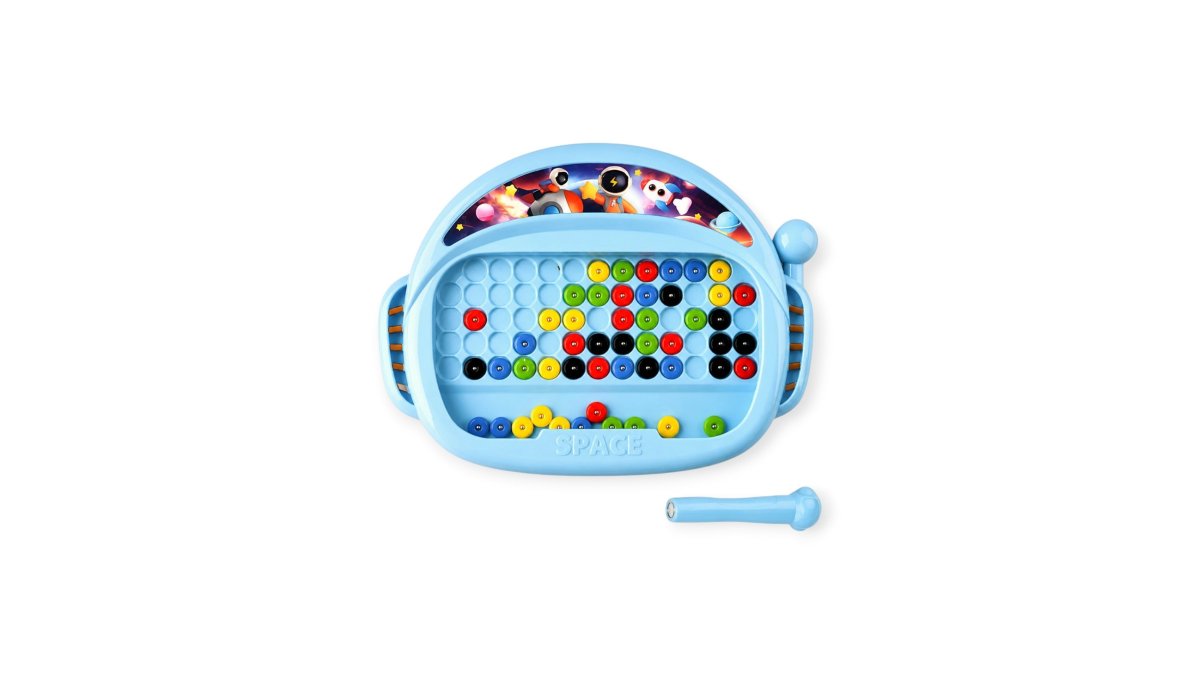
4. Montessori Magnetic Dot Art Drawing Board: Best for Pincer Grasp
Pincer grasp development has a direct line to early writing, and the Montessori Magnetic Dot Art Drawing Board targets it for $29.95. Kids use a magnetic pen to lift and place 50 colorful beads into patterns, one at a time.
5. Montessori Beads & Balance Stacking Game: Best for Threading and Sorting
Threading and sorting are the core skills here, and the Montessori Beads & Balance Stacking Game covers both for $39.95. The set includes a wooden stand, 25 wooden beads, 2 threading strings with wooden tips, and 8 double-sided pattern cards covering 16 sequences.
Frequently Asked Questions
What toys help with fine motor skills?
Toys that require grasping, twisting, threading, and placing build the small hand muscles children need for writing. Montessori toys for fine motor skills include screwdriver boards, threading bead sets, sorting boxes, and magnetic drawing boards.
At what age should a child start using Montessori fine motor toys?
Simple grasping and sorting toys suit children around 12 months, like the Carrots Harvest Box, which is appropriate for 1 year and up. Threading, stacking, and screwdriver activities typically fit ages 2 to 3. Watch your child's grip and patience rather than the calendar. If they can pick up a small object with thumb and forefinger, they are ready for pincer grasp practice.
How do Montessori toys differ from standard plastic toys?
Montessori toys are built around a single skill or purpose, made from natural materials like beech or pine wood, and designed for child-led learning rather than flashing lights and preset outcomes. A wooden screwdriver board, for example, lets a child repeat the same twist until they master it. Standard plastic toys often do the work for the child. The Montessori approach asks the child to do the work, which builds grasping strength, motor planning, and independent play.
Are wooden Montessori toys safe and non-toxic?
Reputable wooden toys use non-toxic, water-based paint and BPA-free materials. Project Montessori toys are made from solid wood, including beech and pine, with smooth, rounded edges and no sharp corners. Check each product listing for its recommended age and any choking hazard warnings, since small parts like screws and beads are not suitable for children under 3. Wipe wooden toys with a damp cloth and mild detergent, and avoid soaking them in water.
Can I just buy a few Montessori toys to test the approach?
Yes. You do not need a full collection to start. Choose one toy that targets a current skill, such as the Montessori Magnetic Dot Art Drawing Board for pen grip or the Bee Wooden Sorting Game for color matching. Watch how your child engages for a week or two, then add a second piece that builds on the first. Buying a few pieces at a time also lets you match toys to your child's developmental stage instead of guessing.