

Montessori Toys for Active Toddlers: 2026 Picks
Table of Contents
- Why Active Toddlers Thrive With Montessori Toys
- Quick Comparison: Top Picks for Active Play
- Montessori Climbing Toys and Movement-Based Picks
- Montessori Toys for 18-Month-Olds: What to Start With
- Indoor Gross Motor Toys for Toddlers in Small Spaces
- Toys That Keep Toddlers Busy: Independent Play Picks
- How to Tell If a Toy Is Genuinely Montessori-Aligned
- Frequently Asked Questions
Last Updated: October 5, 2026
Why Active Toddlers Thrive With Montessori Toys
The global Montessori toys market hit $3.5 billion in 2025 and is projected to reach $3.8 billion in 2026, according to Intel Market Research's Montessori Toys Market 2026 to 2034 report.
Montessori toys for active toddlers work because they treat movement as learning, not misbehavior. A child hauling a wooden bowling ball across the rug is doing real developmental work: balance, grip, aim, and the patience to try again.

Below, we break down our top picks by developmental stage, plus how to spot a toy that is genuinely Montessori-aligned rather than just labeled that way.
Quick Comparison: Top Picks for Active Play
Here is how our active-play picks compare on price, age range, and what each develops.
| Toy | Price | Age Range | Best For |
|---|---|---|---|
| Montessori Balance Bike for Toddlers | $119.95 | 2+ years | Balance and coordination |
| Montessori Adventure Rail Train | $64.45 | 3+ years | Building and problem-solving |
| Montessori Rainbow Wooden Bowling Set | $59.95 | 3+ years | Independent play |
| Montessori Animal Toss Game | $49.95 | 3+ years | Family game time |
| Montessori Busy Board Truck | $49.95 | 2-5 years | Fine motor skills |
| Montessori Outdoor Animal Ring Toss Kit | $44.45 | 3+ years | Backyard coordination |
| Montessori Toss and Catch Ball Set | $39.95 | 3+ years | Hand-eye coordination |
| Montessori Building Blocks Set | $39.95 | 18 months+ | Early stacking and color work |
| Soft Plush Soccer Ball | $24.45 | 1+ years | First kicking and rolling |
Montessori Climbing Toys and Movement-Based Picks
Movement-based Montessori climbing toys and ride-ons give toddlers a safe outlet for climbing, rocking, and pushing, which is exactly what builds gross motor skills at this age.

Our top pick here is the Montessori Balance Bike for Toddlers at $119.95. It has no pedals, so kids learn balance and steering before pedaling.
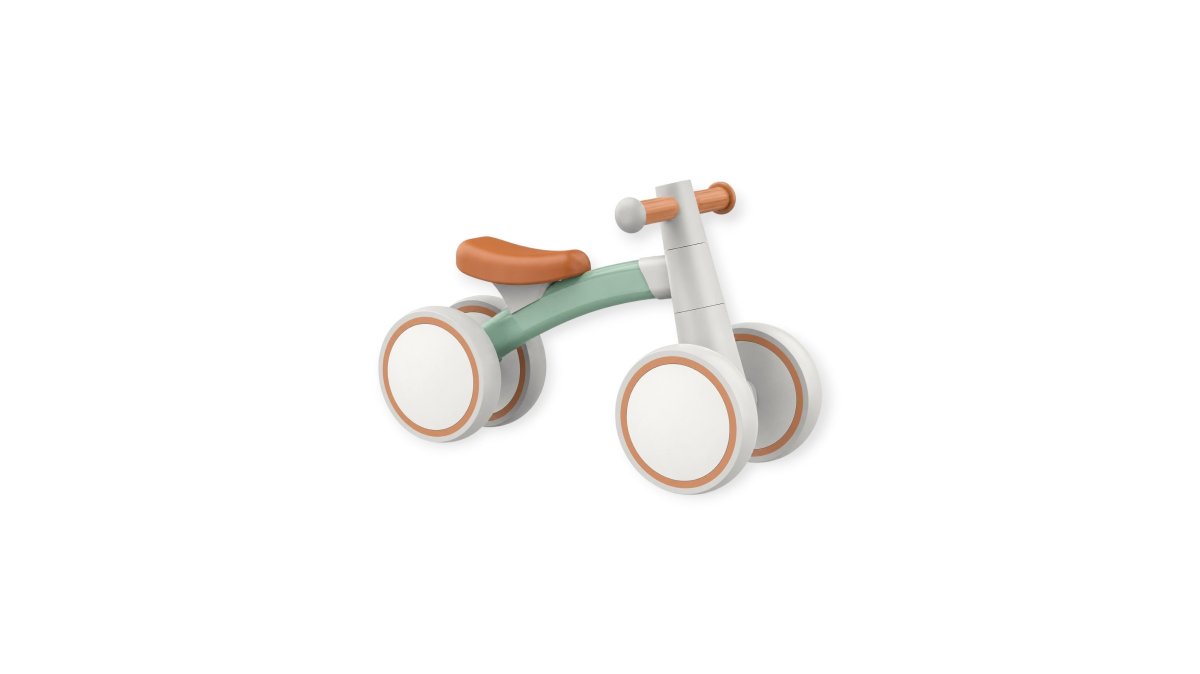
Balance Bikes and Rocking Toys
Rocking and balance toys teach a toddler to shift weight and self-correct, the foundation for walking, running, and eventually pedaling. For younger toddlers still steadying their footing, our Soft Plush Soccer Ball at $24.45 gives them something to chase, kick, and carry without hard edges.

Toss and Catch Games for Coordination
Toss games build hand-eye coordination fast because the feedback is immediate. Our Montessori Toss and Catch Ball Set at $39.95 uses hook-and-loop paddles that grab the ball on contact, so a wild first throw still ends in a catch, which matters for toddlers who get frustrated when a game feels too hard too soon.
The Montessori Outdoor Animal Ring Toss Kit at $44.45 adds counting to the mix, with numbered wooden animal stands that turn a simple toss into a scoring game.
Montessori Toys for 18-Month-Olds: What to Start With
Most age guides sort toys by birthday and stop there. But two 18-month-olds can be months apart in ability, and a toy that is perfect for one is a frustration machine for the other. A more useful approach: sort by what the child can already do, then pick the toy that stretches that skill by one small step.
Here is how that breaks down for the youngest end of this range.
12 to 18 Months: Cause, Effect, and Carrying
At this stage, the goal is simple actions with a visible result: a toddler drops a ball and it rolls, stacks a block and it stays, or carries something heavy across the room because carrying itself is the game.
Look for:
- Soft, graspable pieces that survive being thrown, chewed, and sat on.
- One-step cause and effect, like a ball that rolls when pushed or a block that stacks on another block.
- Lightweight construction so the child can carry the toy themselves, which is the first form of independent play.
Our Montessori Building Blocks Set at $39.95 fits this stage. The large, soft pieces are easy for small hands to grip, certified by ASTM, CPSIA, and CPC, and washable, which matters more than most parents expect at this age.
18 to 24 Months: Stacking, Sorting, and First Aim
Once a toddler can stack two or three blocks reliably, they are ready for toys that ask for more precision: tossing, dropping into a target, and simple sorting start to click.
Look for:
- A clear target or container so the child can see whether they succeeded.
- Pieces sized for a full-hand grip, not a pincer grasp.
- No small parts that fit through a choke-test tube.
A soft ball like our Soft Plush Soccer Ball at $24.45 works here because it is forgiving on contact, easy to chase, and transitions into the next stage without needing to be replaced.
24 to 36 Months: Rules, Turn-Taking, and Real Coordination
By two and a half, many toddlers can follow a two-step instruction, wait a short turn, and aim with intent. This is when toss games, bowling, and simple building challenges become genuinely fun rather than just chaotic.
Look for:
- Self-correcting feedback so the child knows if it worked without an adult narrating.
- Adjustable difficulty so the same toy grows with the child for a year or more.
- Enough pieces for two players, which is when parallel play starts turning into real cooperative play.
Our Montessori Rainbow Wooden Bowling Set at $59.95 and the Montessori Toss and Catch Ball Set at $39.95 both land in this range.
A Quick Ability Check Before You Buy
Before adding anything to the cart, ask three questions:
- Can my child already do the first step of this toy on their own?
- Is there a clear next step they cannot do yet but could learn in a week or two?
- Can they carry, set up, and put it away without me?
If all three are yes, the toy is at the right level. If the first is no, it is too hard; if the second is no, it is too easy and will be ignored within a month.
Montessori Balance Bike for Toddlers →
Indoor Gross Motor Toys for Toddlers in Small Spaces
Indoor gross motor toys for toddlers need to work in the space you actually have, not the space a catalog photoshoot implies.
The bigger issue most guides skip: small-space active play is not just about size. It is about three things at once, footprint when set up, footprint when stored, and how much noise the toy makes on the floor below you.
What to Measure Before You Buy
Before ordering anything, measure the clear floor space you are willing to give up during play, not the total room size. Most families have about a six-by-six-foot clear zone in a living room once furniture is pushed back; anything larger will not get used daily.
Also check:
- Storage footprint. Does it fold flat, nest, or fit in a bin under a bed?
- Setup time. If it takes more than a minute to set up, it will not come out on a weeknight.
- Noise. Hard wooden pieces on a bare floor carry to the unit below. A low-pile rug or foam mat under the play zone cuts most of that.
Fold-Flat and Compact Picks
The Montessori Animal Toss Game at $49.95 folds flat and sets up in seconds, with a reversible board that switches between bean bag toss and a dart-style challenge.
For quieter indoor movement, the Montessori Busy Board Truck at $49.95 is only 6.8 inches long. Kids turn screws, press traffic-light buttons, and use the included child-safe tools, then push the finished truck across the floor.
Setting Up a Safe Indoor Movement Zone
A few minutes of setup prevents most indoor active-play injuries.
- Clear the fall zone. Give at least three feet of clear space on every side of anything a child climbs, rides, or throws toward.
- Anchor or stabilize. If a toy can tip, place it against a wall or on a rug with grip backing. Never place a climbing toy on a hard floor without a mat underneath.
- Remove hard edges nearby. Coffee table corners, hearths, and low shelves are the usual culprits, move or pad them before play starts.
When to Choose Indoor vs. Outdoor
Some active toys work in both settings, and some really do not. Toss games with soft beanbags and foam balls are fine indoors.
If you have a yard, the Montessori Outdoor Animal Ring Toss Kit at $44.45 is built for grass, with numbered wooden animal stands that turn a simple toss into a scoring game. If you do not, keep the indoor picks above and save the outdoor set for park days.
Toys That Keep Toddlers Busy: Independent Play Picks
The best independent-play toys are the ones a toddler can set up, run, and reset without an adult stepping in every two minutes. That self-sufficiency is the whole point.
Our Montessori Rainbow Wooden Bowling Set at $59.95 fits that description well. Ten pastel wooden pins, two solid wooden balls, and a three-step loop kids can run alone: set up the pins, roll the ball, count what fell.
Building Sets and Problem-Solving Play
Building toys push problem-solving further because the child has to plan before they build. The Montessori Adventure Rail Train at $64.45 gives kids clip-together pieces to design their own loops and drops, then a USB-C rechargeable train that races through the finished track, no batteries to replace, and no two builds look alike.
The Montessori Domino Train Set at $39.95 takes a simpler route: load the dominoes, press the switch, and watch the chain reaction unfold. Both build patience and sequencing at different difficulty levels.
How to Tell If a Toy Is Genuinely Montessori-Aligned
A toy is genuinely Montessori-aligned when it is simple, open-ended, and built for the child to use independently, with no batteries doing the work for them. That test rules out a lot of products marketed with the name.
Run any toy through these five checks before you buy:
- One clear purpose. It teaches one skill well rather than flashing lights in six directions.
- Self-correcting. The child can see for themselves whether it worked, without an adult explaining.
- Open-ended. There is more than one way to play with it.
A study published through PubMed Central on children's play and toys found that 82% of children were more active and 82% learned better in active play settings, which is the outcome you are actually shopping for.
Frequently Asked Questions
What are some good Montessori toys for a very active toddler?
Balance bikes, toss-and-catch sets, and wooden bowling games work well because they channel movement into a goal. The Balance Bike for Toddlers ($119.95) builds coordination for ages 2 and up, while the Toss and Catch Ball Set ($39.95) uses hook-and-loop paddles so beginners catch on the first try. Both keep a toddler moving without a screen.
Which Montessori toys encourage toddlers to climb and move?
Climbing structures and balance-focused toys are the core of this category. A balance bike trains steering and stability, while ring toss and bowling sets add aim and throwing motion. The Rainbow Wooden Bowling Set ($59.95) lets a toddler set up pins, roll, and reset independently, which is the kind of self-directed movement Montessori play is built around.
How do I choose safe climbing toys for a toddler?
Check the age rating first, then look at the base and turning limits. The Montessori Balance Bike has a 135-degree turning limit and gravity steering to prevent tipping, plus a closed wheel design so feet cannot get clamped. Place any climbing or riding toy on a flat, clear surface and supervise children under 3, who are still building balance.
What indoor toys help active toddlers use their energy?
Indoor-friendly picks include the Rainbow Wooden Bowling Set, the Animal Toss Game with its reversible fabric board, and the Domino Train Set. These work in a living room or apartment because they need only a small flat space. The bowling set uses solid wood pins that stay put on carpet or hard floors, and the toss game folds flat for storage.
How do I know if a toy is genuinely Montessori-aligned?
Look for simple design, open-ended play, and child-led use. A genuine Montessori toy lets a child set it up, use it, and correct themselves without an adult directing every step. The Busy Board Truck is a good example: kids turn screws, press traffic-light buttons, and push the finished truck, learning cause and effect through their own hands rather than a screen.
The hard part is not finding toys. It is finding ones that survive a toddler's actual energy level and still teach something. Project Montessori curates educator-approved toys rooted in the Montessori philosophy, from balance bikes that build coordination to building sets that grow problem-solving skills. Every pick above is designed for independent, screen-free play your child can run without you. Shop now and give your toddler a toy that keeps up.