

Montessori Toys for 18 Month Old: 2026 Guide
Table of Contents
- What Makes a Toy Montessori-Aligned for an 18 Month Old
- Montessori Activities for 18 Month Old: Practical Ideas for Daily Play
- How to Set Up a Montessori Toy Rotation That Works
- Best Montessori Toys for 18 Month Old: What to Look For
- DIY Montessori Alternatives and Cleaning Wooden Toys
- Frequently Asked Questions
Last Updated: September 25, 2026
What Makes a Toy Montessori-Aligned for an 18 Month Old
A Montessori-aligned toy for an 18 month old is a simple, natural-material object with one clear purpose, no batteries, and no right answer built in, letting the child lead the play. At Project Montessori, every toy we carry meets that standard, which is why the montessori toys for 18 month old we recommend look almost boring next to flashing plastic alternatives.
Simple Design, Natural Materials, and Open-Ended Play
How Montessori Toys Differ From Electronic Alternatives
Montessori Activities for 18 Month Old: Practical Ideas for Daily Play
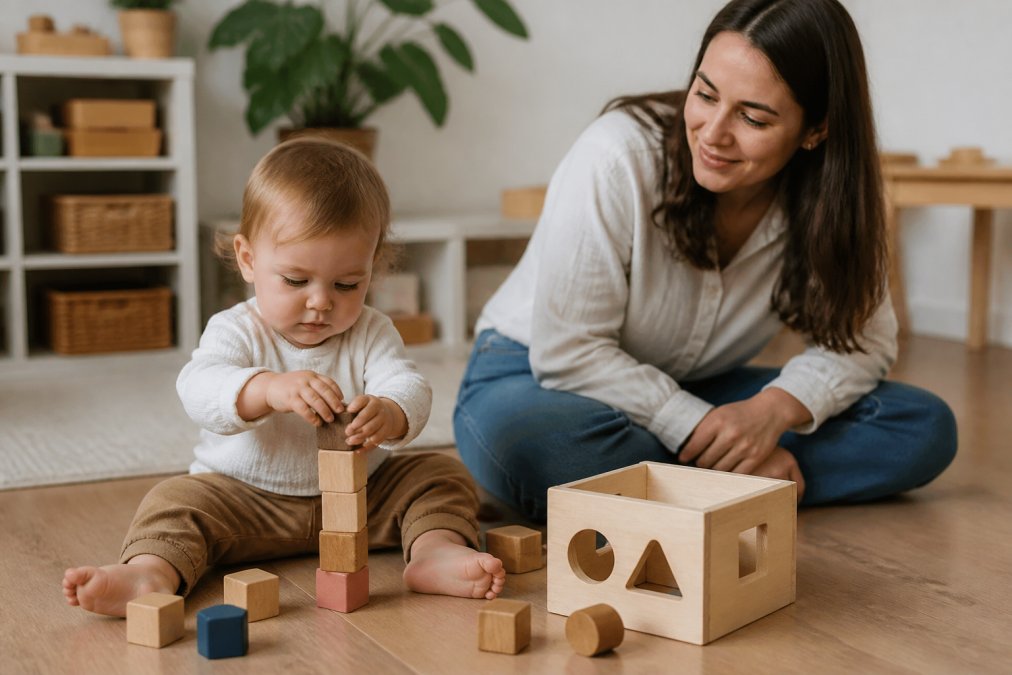
Montessori activities for an 18 month old are built into ordinary routines, not saved for a special play corner. The child is in a sensitive period for order, movement, and language, so the best activities are real tasks they can complete themselves.
Practical Life Activities That Build Toddler Independence
- Carrying a small pitcher and pouring water into a cup
- Wiping a spill with a child-sized cloth
- Putting shoes on a low shelf and carrying them to the door
- Spooning dry pasta from one bowl to another
- Watering a low plant with a small watering can
Sensory Play and Exploration With Natural Materials
How to Set Up a Montessori Toy Rotation That Works
A Montessori toy rotation keeps only a small number of toys available at once and swaps them every one to two weeks. The goal is not novelty for its own sake; it is protecting deep, repetitive play.
Rotation Step |
What to Do |
Frequency |
|---|---|---|
Observe |
Watch which toys get ignored |
Daily, briefly |
Remove |
Pull 2-3 toys out of the room |
Every 1-2 weeks |
Store |
Keep them out of sight, not on a shelf |
Same day |
Reintroduce |
Bring back one "old" toy as new |
Every 1-2 weeks |
Reset |
Tidy the shelf so each toy has a place |
Weekly |
Toy Rotation Strategies for Small Spaces
Best Montessori Toys for 18 Month Old: What to Look For
The best Montessori toys for an 18 month old are simple, made from natural materials, and matched to the child's current motor skills. Look for toys that require the child to act, not react, and skip anything with screens, loud sounds, or a single "win" button.
Wooden Toys vs. Plastic Alternatives
Feature |
Wooden Toys |
Plastic Alternatives |
|---|---|---|
Sensory feedback |
Weight, grain, warmth |
Light, uniform |
Durability |
Repairs, ages well |
Can crack, fade |
Typical play style |
Open-ended |
Often battery-driven |
Cleaning |
Wipe, avoid soaking |
Easy to wash |
- Shape sorters with 3-5 chunky shapes build wrist rotation and shape discrimination. Look for ones with a lid that lifts off rather than a locked box, so the child can retrieve pieces independently.
- Stacking rings on a tapered post teach size comparison and sequencing. A set with 5-7 rings and a flexible base is more forgiving than a rigid post.
- Nesting cups or bowls develop size ordering and spatial reasoning. They double as bath toys and scooping tools.
- Chunky knob puzzles with 3-5 pieces isolate the pincer grasp. The knob should be large enough for a whole hand to grip, not just fingertips.
- Large wooden beads and thick laces introduce threading, which combines pincer grasp with hand-eye coordination. A lace with a stiff, wood-tipped end is far easier for small hands than a floppy string.
- A posting box with a sliding lid or open top lets the child drop coins or discs into a slot, then retrieve them, a cycle that builds object permanence and cause-and-effect.
- A low push wagon or push cart with a wide base and resistance wheels. The resistance is the point, it slows the cart so the child can keep up without falling forward.
- A sturdy ride-on with a low seat and no pedals. The child propels with feet, which builds leg strength and steering coordination.
- A Pikler-style climbing triangle with a low angle (under 30 degrees) and a non-slip base. This is the single most-used gross motor item in many Montessori homes because it adapts as the child grows.
- A balance board with a gentle curve. At 18 months, the child may only step on and off; by 24 months, they may rock and balance.
What to Skip at This Age
- Electronic learning tablets with letter and number buttons. The child is not ready for symbol recognition, and the toy does the work for them.
- Toys with more than one clear purpose, a shape sorter that also plays music and lights up splits attention instead of building it.
- Tiny building sets with pieces under 1.25 inches in diameter. These are a choking hazard and too small for the child's grasp.
- Push toys that require walking on tiptoe or have a narrow base. These tip easily and frustrate rather than challenge.
DIY Montessori Alternatives and Cleaning Wooden Toys
DIY Montessori alternatives stretch a toy budget without sacrificing the philosophy, a basket of safe household items often teaches as much as a store-bought set. Choose objects that are non-toxic, appropriately sized, and safe to mouth.
DIY Montessori Alternatives That Actually Work
- A posting box from an oatmeal container. Cut a slot in the lid wide enough for poker chips or large buttons. The child drops them in, then you show them how to remove the lid and retrieve. This builds object permanence and the wrist rotation used in posting.
- A sorting tray from a muffin tin. Use large pompoms, felt balls, or wooden rings in 2-3 colors. At 18 months, the child may only move items between cups; by 24 months, they may sort by color. The tin itself teaches one-to-one correspondence.
- A texture basket from fabric scraps. Cut 4-inch squares of wool, cotton, flannel, and burlap. Put them in a drawstring bag. The child pulls them out, rubs them, and compares. This is a zero-cost sensory activity that rivals any store-bought texture set.
- A pouring station from two small pitchers. Use a tray with a small pitcher of water and a cup. The child pours, spills, and wipes up with a sponge. This is the single most valuable practical life activity at this age because it combines gross motor control, fine motor control, and real consequence.
- A shape sorter from a cardboard box. Trace 3-4 shapes on the box lid, cut them out, and provide wooden or foam shapes that fit. The cardboard version is less durable than wood but costs nothing and can be replaced.
- A threading set from a colander and pipe cleaners. Turn the colander upside down and show the child how to push pipe cleaners through the holes. This builds the pincer grasp and hand-eye coordination without any purchased materials.
Signs of Overstimulation and How to Prevent Them
Cleaning and Maintenance of Wooden Toys
A maintenance routine that keeps wooden toys safe:
- Weekly: Wipe all wooden toys with a damp cloth. Check for splinters, cracks, or loose parts.
- Monthly: Inspect joints and pegs. Tighten or glue any loose pieces before they become a choking hazard.
- Seasonally: Sand rough edges with fine-grit sandpaper (220 or higher), then re-oil with food-grade mineral oil or a beeswax-based finish. This restores the wood and makes future cleaning easier.
- After illness: Clean with the vinegar solution, then dry fully in sunlight if possible. Sunlight has a natural sanitizing effect on wood.
What not to do:
- Do not submerge wooden toys in water, even briefly. The grain absorbs water and the finish breaks down.
- Do not use the dishwasher or microwave, even on a sanitize cycle.
- Do not use harsh chemicals, which can leave residue on a toy that goes in the mouth.
- Do not store wooden toys in a damp basement or garage. Humidity warps wood and encourages mold.
Frequently Asked Questions
What is the most important toy for an 18-month-old child?
The most important toy supports your child's current developmental drive: practicing fine motor skills and independence. A wooden shape sorter or a set of stacking toys with simple design lets your toddler grasp, sort, and nest objects, building the pincer grasp and hand-eye coordination. These open-ended play materials adapt as your child grows, unlike electronic toys that do the playing for them. Choose one that matches your child's interest and rotate it regularly to keep engagement high.
How many toys should an 18-month-old have in a Montessori environment?
Montessori guides often suggest offering 6 to 10 toys at a time, displayed on low shelves your toddler can reach. Too many choices can lead to overstimulation and shallow play. Use a toy rotation: keep a small selection out for one to two weeks, then swap in a fresh set. This approach encourages repetitive play, problem-solving, and deeper focus. For small spaces, store the rest in bins or baskets and cycle them based on your child's developmental milestones.
Are wooden toys better for 18-month-olds than plastic toys?
Wooden toys offer advantages for this age: they are durable, often made from natural materials, and provide varied sensory feedback (weight, texture, temperature) that plastic cannot match. They also tend to have simple design, which supports open-ended play and imaginative play. Many parents choose non-toxic, sustainably sourced wooden toys to avoid concerns about chemical additives. However, plastic toys can be safe and washable; the key is choosing toys that invite active exploration rather than passive entertainment. At Project Montessori, you can find educator-approved wooden options that align with Montessori principles.
What are some Montessori activities for an 18-month-old child?
Practical life activities like transferring objects with a spoon, pouring water from a small pitcher, and wiping a table build toddler independence and sequencing. Sensory play with textured balls, sand, or water supports sensory development. For fine motor skills, try threading large beads, stacking rings, or using a shape sorter. Gross motor development gets a boost from climbing structures, pushing a walker, or carrying a basket. These activities are child-led learning: follow your toddler's interest and allow repetition, which is how they master new skills.
Choosing toys for an 18 month old is really about trusting your child to do the work. The right setup, a few simple toys on a low shelf and a rotation that keeps things fresh, does more for development than any battery-powered gadget. Project Montessori carries educator-approved, Montessori-rooted toys built to support independence, creativity, and problem-solving at every stage. Shop now and give your toddler a play space that grows with them.